Barcelona (Spain), 2025
Notes on Transformación, a piece by Alejandra Glez, Lucía Lamata and María de la Rica
Is change an end or a process, is it the bullseye or the arrow’s flight? The truth is we must begin from our individuality, readjust the structures upon which we have built our belief systems, social life, our actions, our identity.
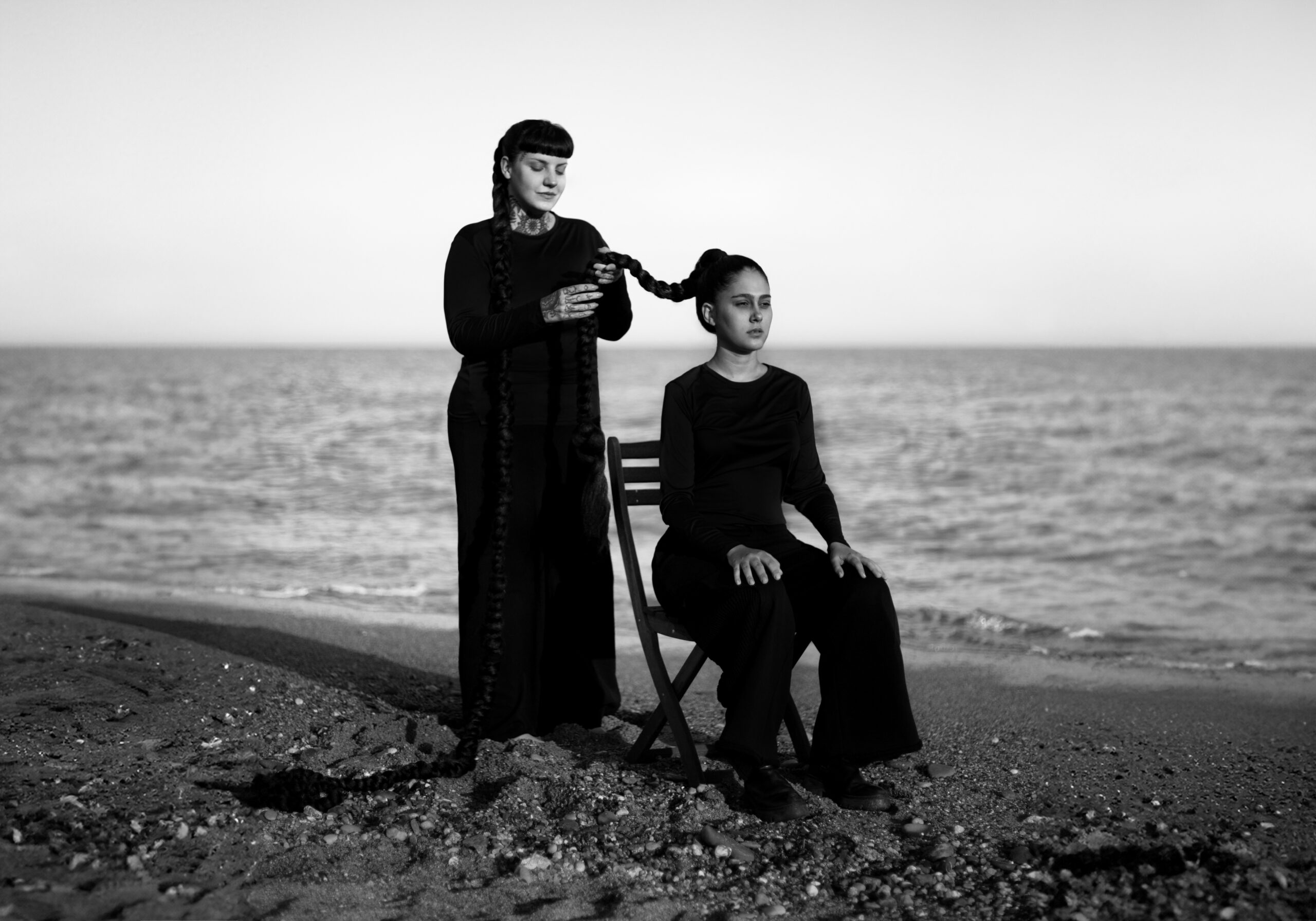
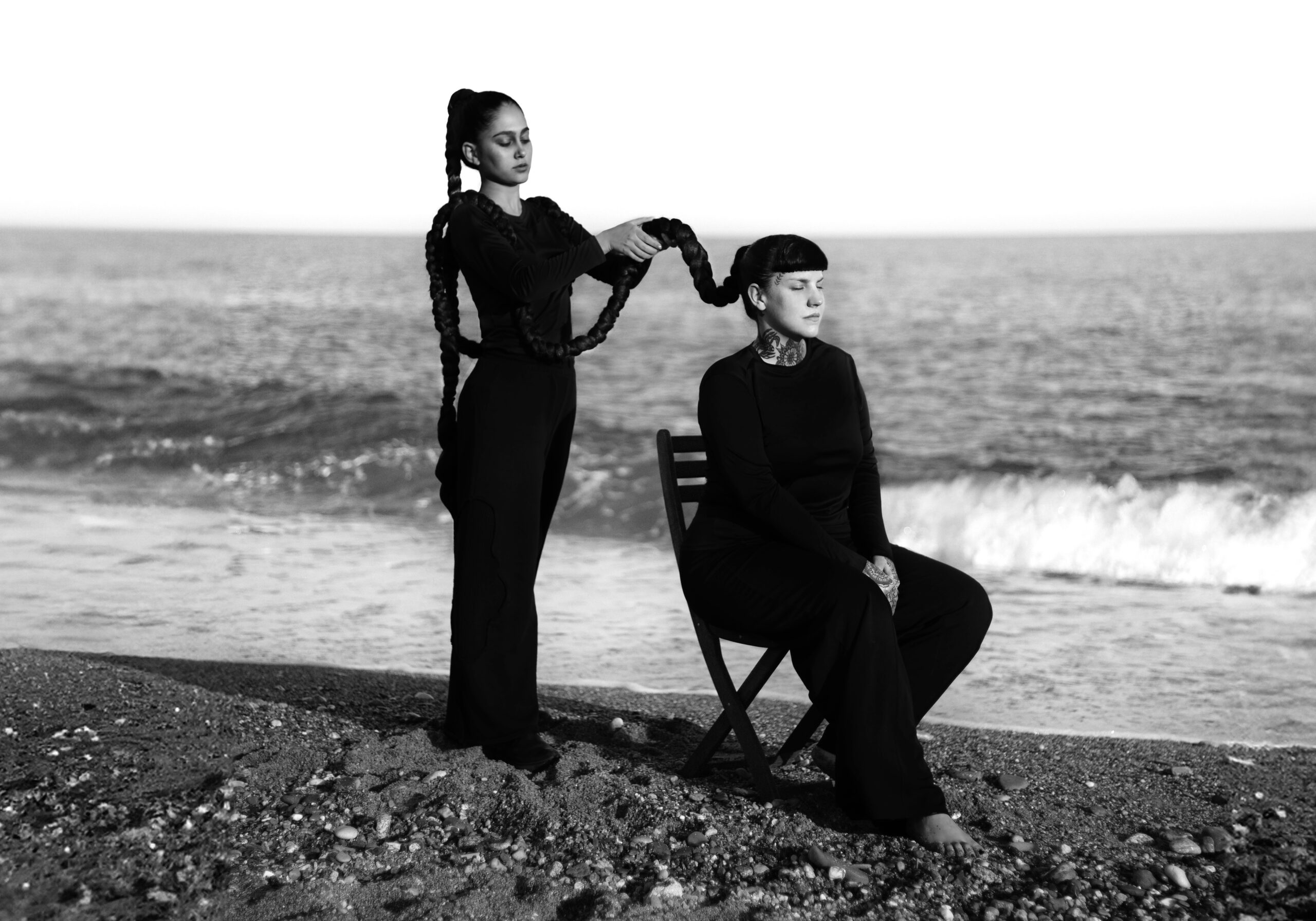
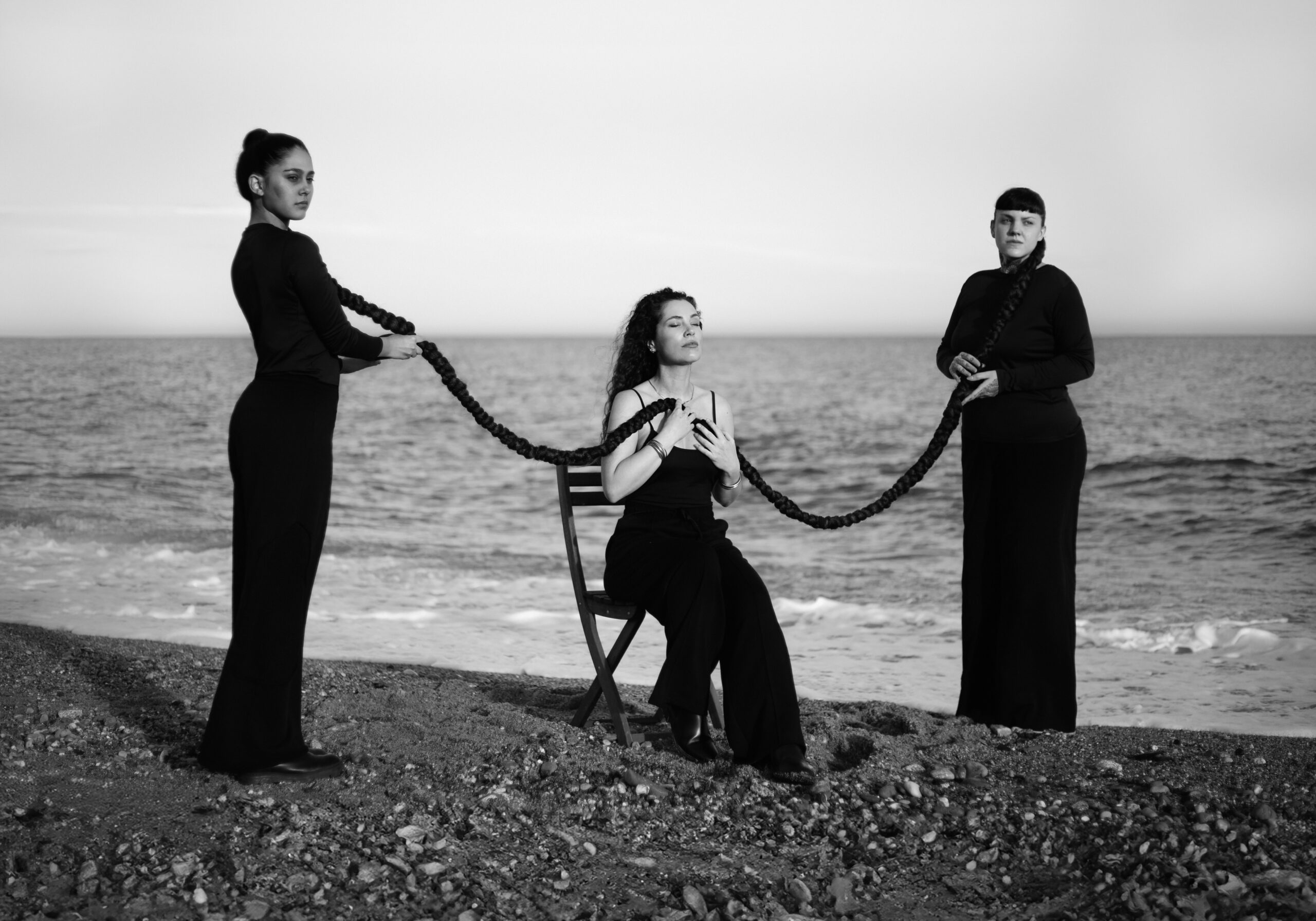
And perhaps during that self-examination—essential for transformation—it is the confrontation with our fears that demands the greatest boldness. They know it, or at least they sense it, and made it the main motivation behind the methodology of this piece, which is also process and trajectory. Alejandra Glez, Lucía Lamata and María de la Rica set out to face their fears head-on and devise strategies to subvert them; thus Transformación was born. Three creators, three moments for one work, three gestures orchestrated from the relationship that art has built among them. A process that culminates in a performative act seeking healing, where the sea is not just landscape and context, and the female bodies embody the nobility of companionship as an expression of sisterhood.
For this final action, Alejandra and Lucía confront the immensity of the sea. They have joined their hair into a braid. While weaving the strands, they establish a bond, a gesture of trust and kinship. It is not the first time that hair or the braid itself appears as a symbol with deep meaning in the artistic discourse. Marina Abramović, Ana Mendieta and Flor Garduño are among the references who have masterfully explored this realm of art—explored, but never exhausted. Alejandra and Lucía turn to the act of braiding hair beyond its contextual, ethnic, social or historical meanings; they choose instead to elevate its spiritual and emotional weight, a form of expression indebted to ancestral traditions and cultural resistance. The braid is an element that connects women, and braiding, a process through which stories are woven together.
Transformación invites us to unveil our vulnerabilities, to expose ourselves as we are, and thereby gain or strengthen trust in ourselves. It constructs a fabric of voices and experiences that reminds us this path, though personal, need not be solitary.
Nayr López García