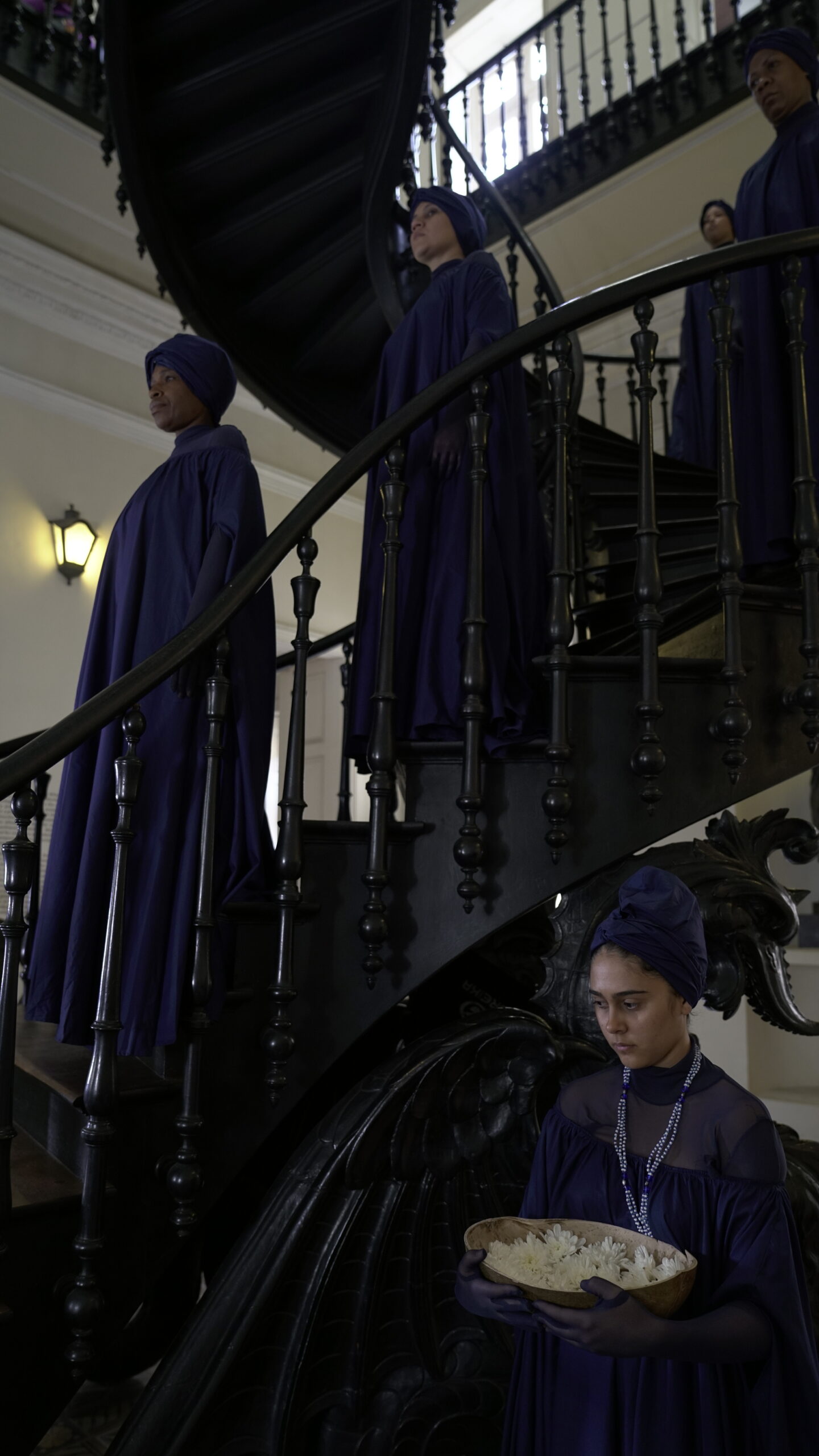

Rio de Janeiro (Brasil), 2020
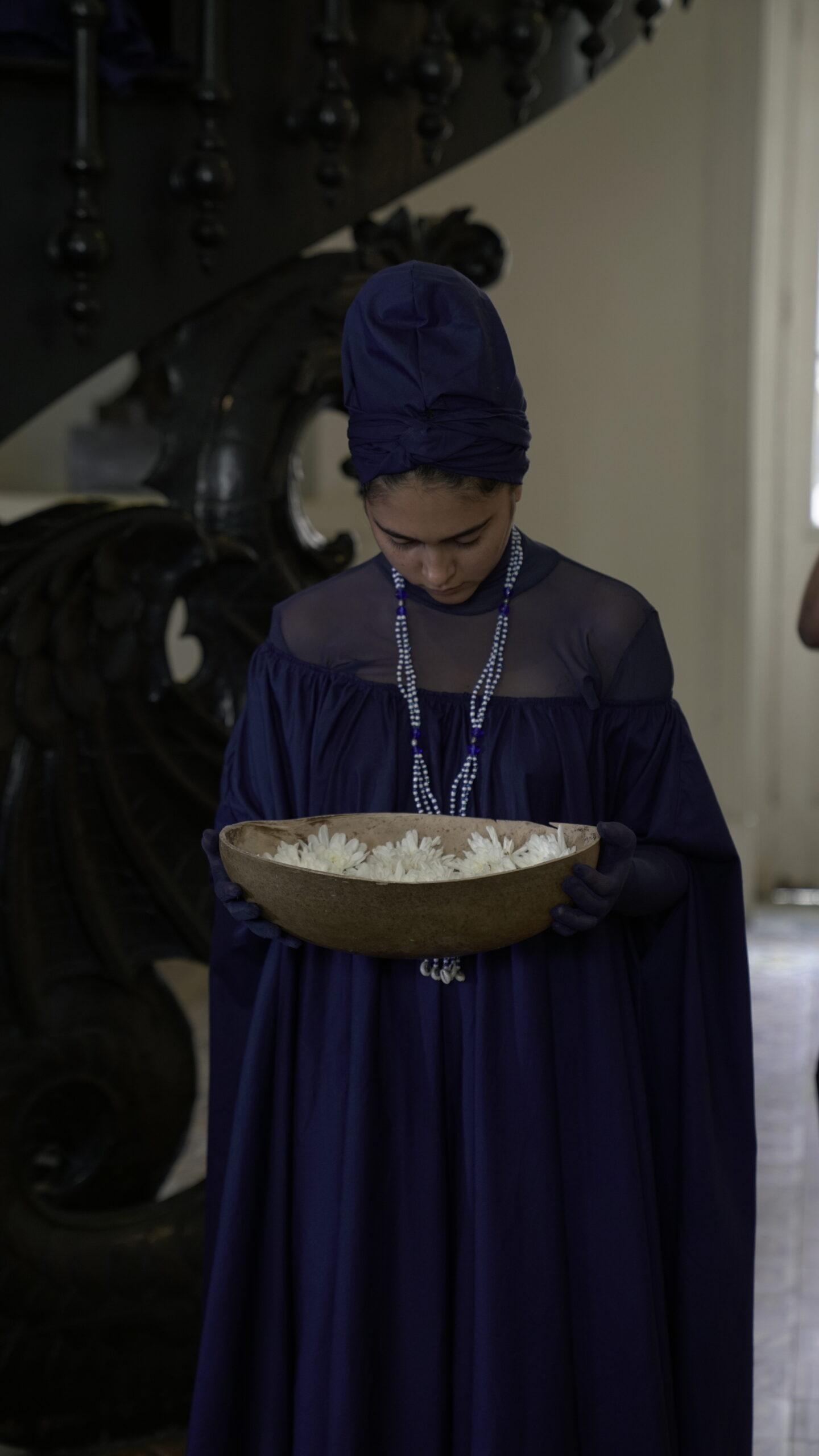
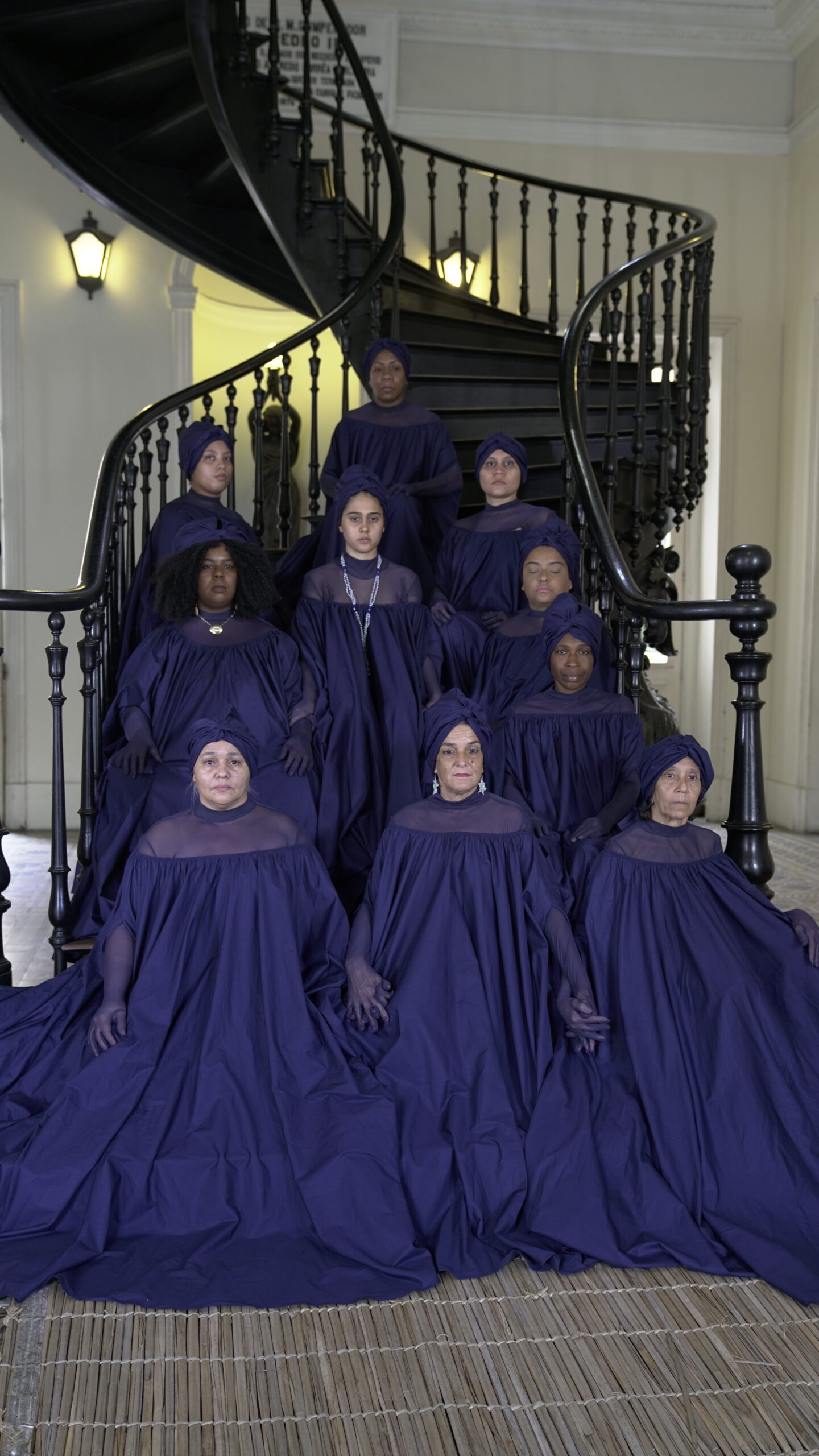
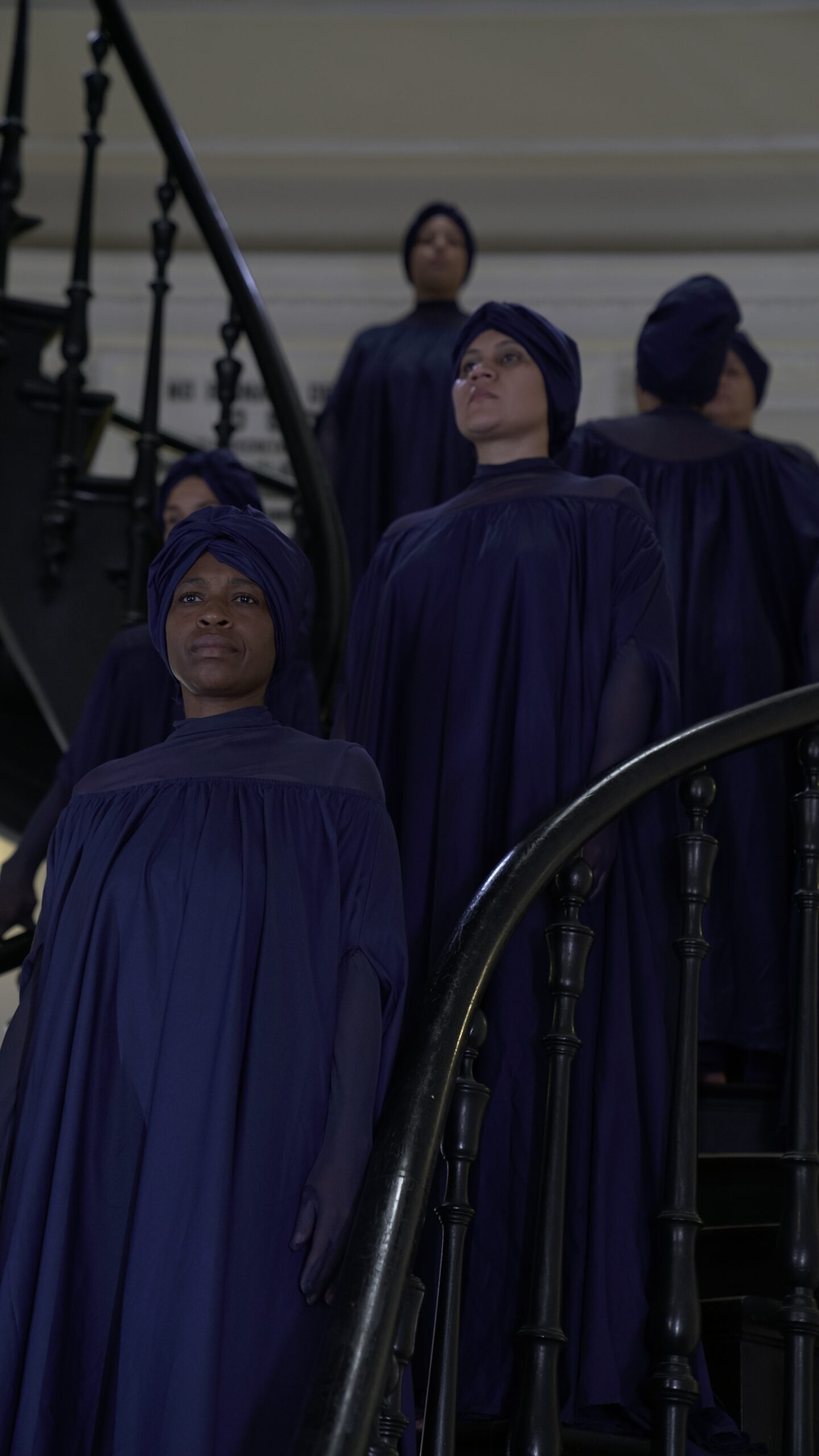
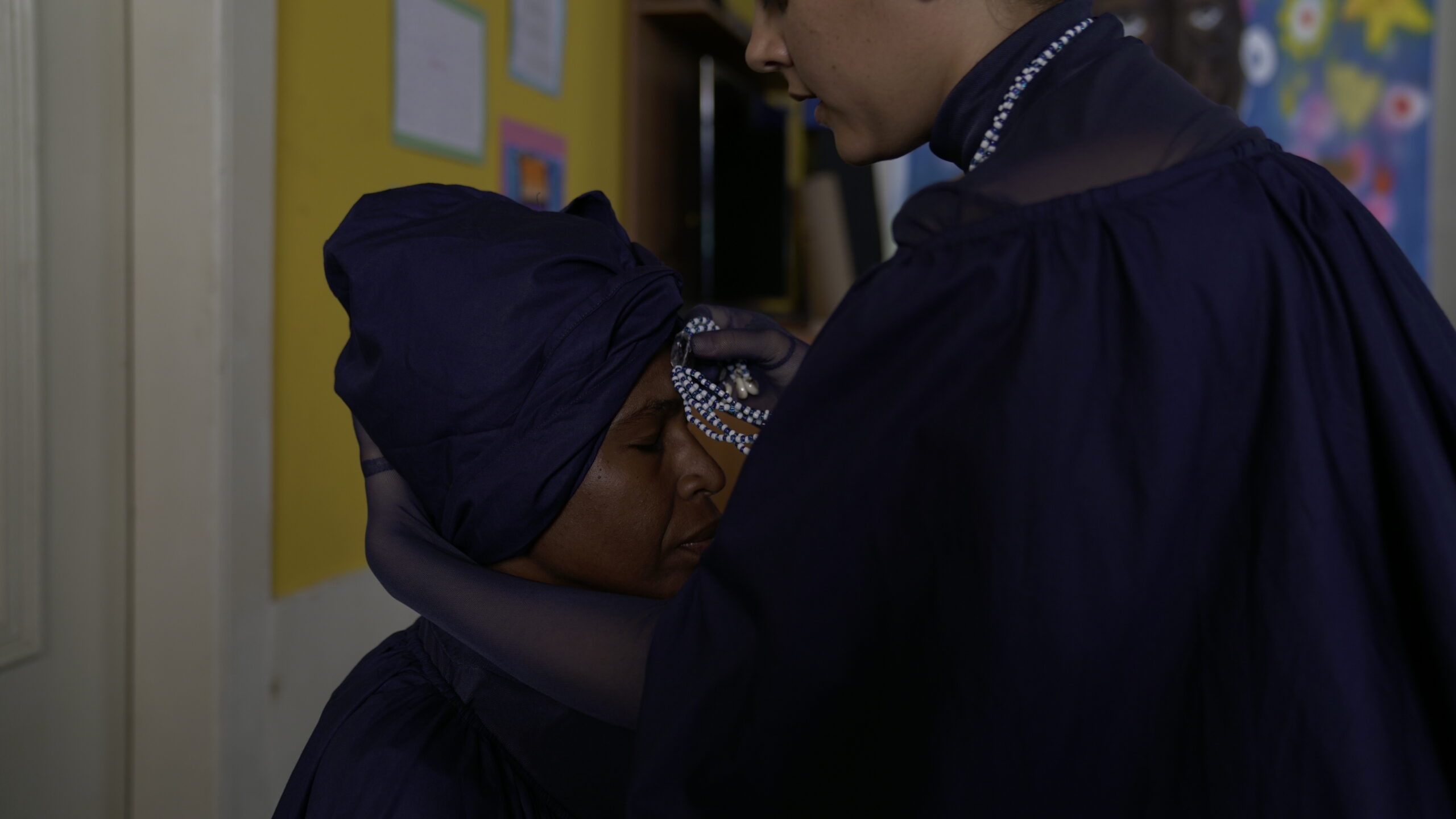
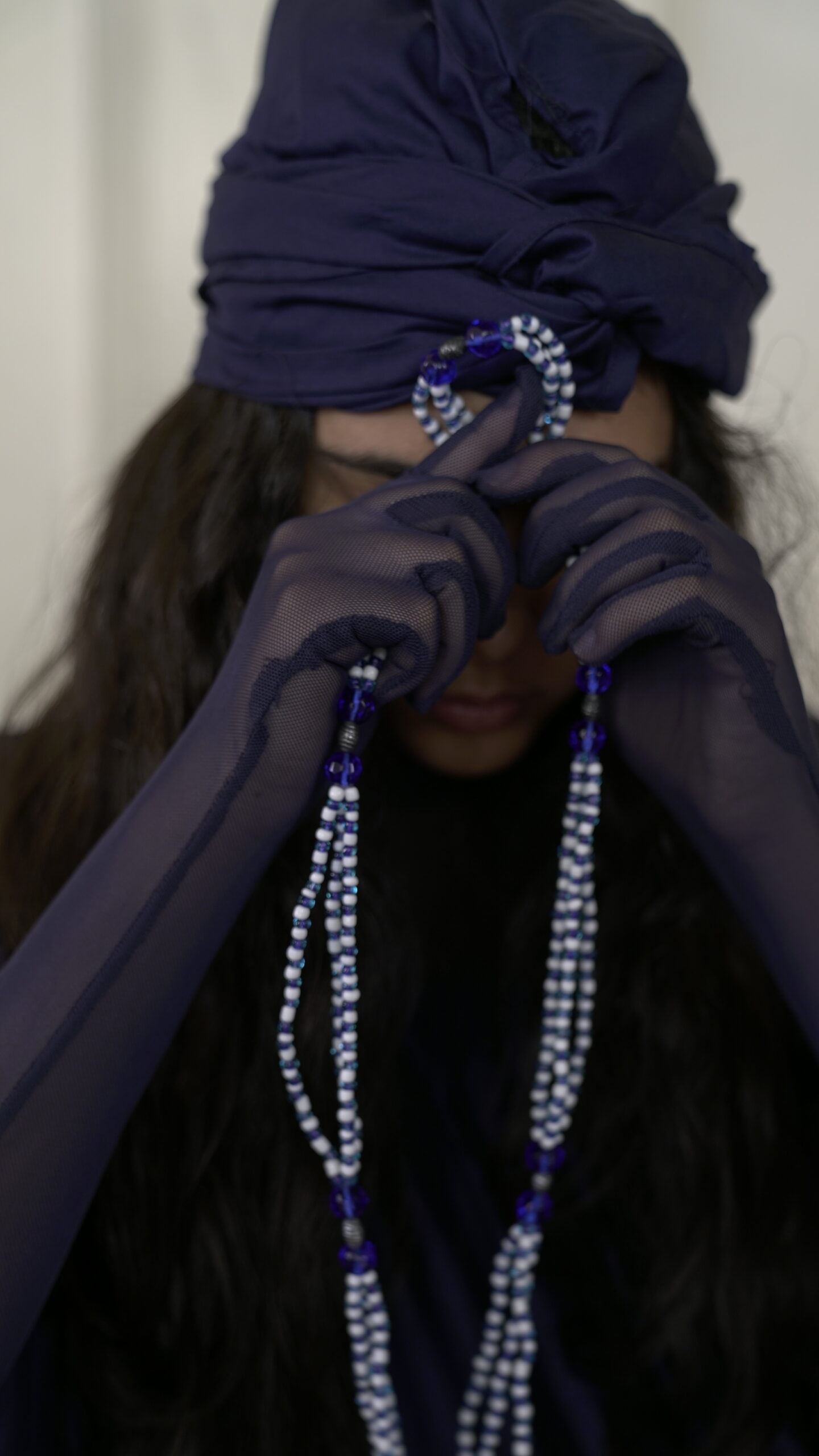
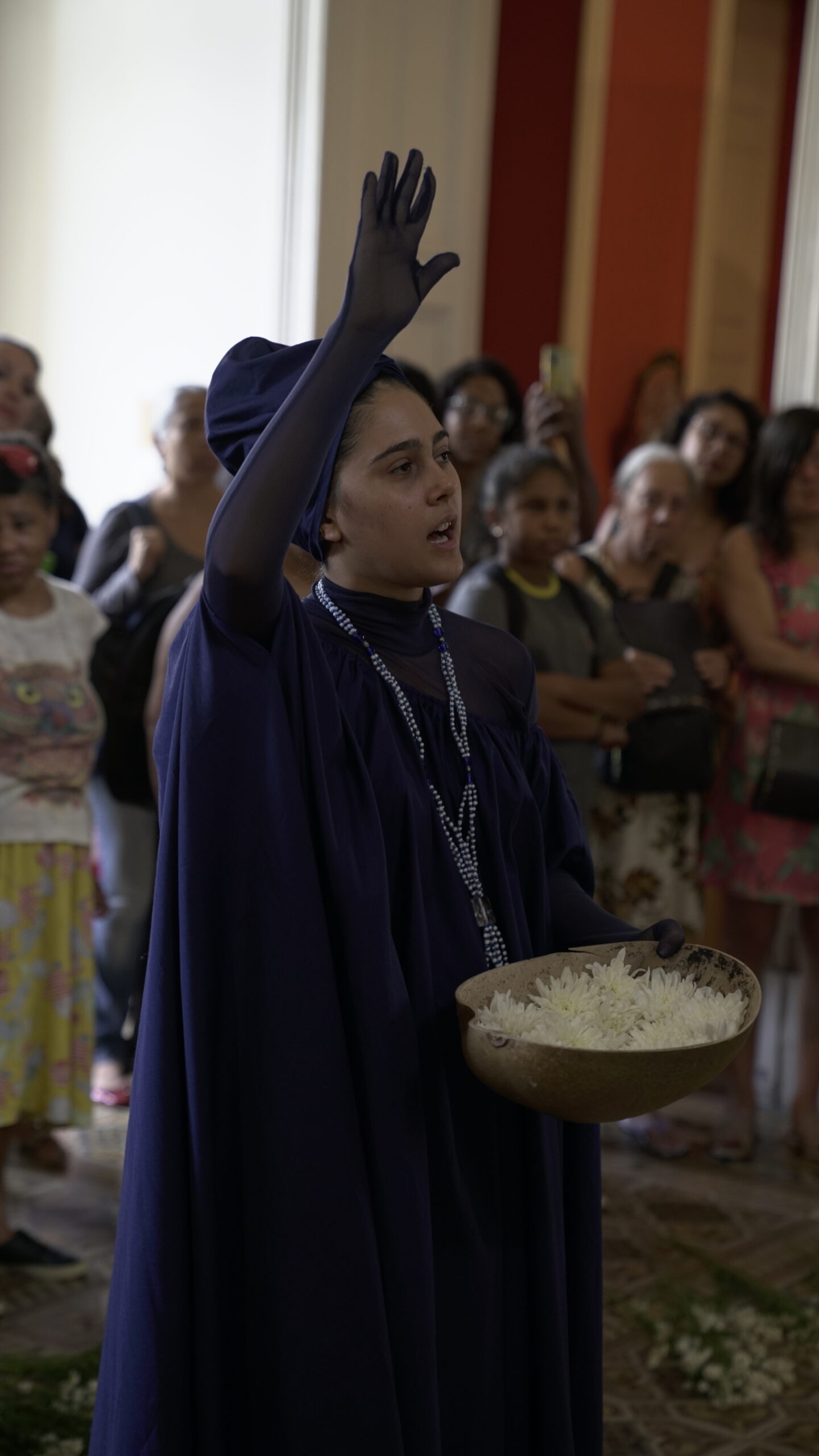
Racialized women rise. Their navy-blue tunics wave like contained water, an echo of the ocean that names them. In the dim light of the altar, their bodies are presence and memory, symbols of resistance in a space that returns them to the center, the sacred place they were never meant to leave. Here, the ritual is justice: the prayer, a spell.
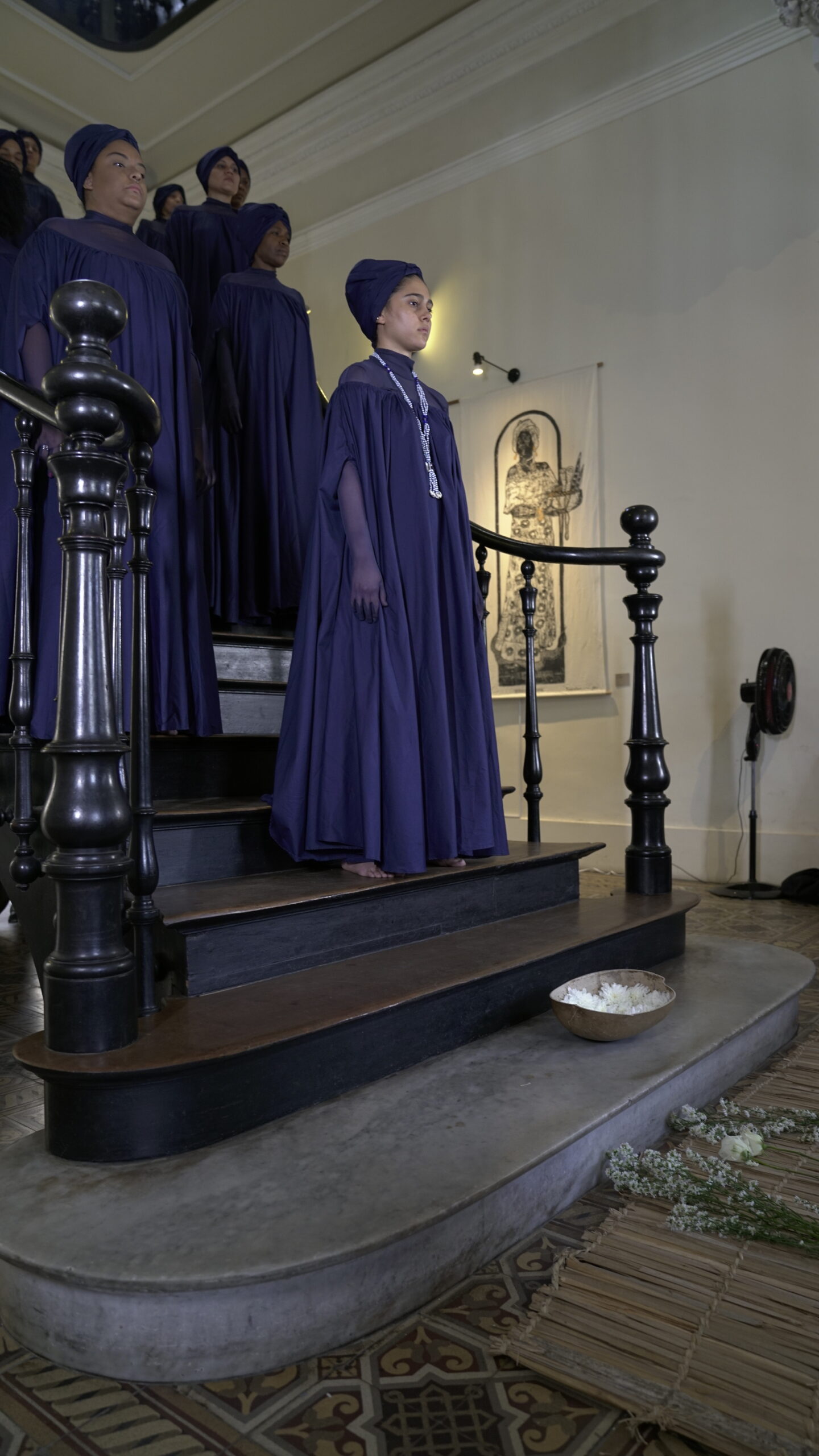
Presented at the Museu da História e da Cultura Afro-Brasileira, this performance by Glez shapes the imagery of Yemayá, the goddess of the sea in the Yoruba cosmovision, whose waters sustain life and carry the memory of those who have been silenced. The work establishes a dialogue between spirituality, identity, and resistance in this context. Beyond the celebration of the sacred, the piece stands in a space of protest: in a world where femicide continues to mark absent bodies, the women here are not martyrs but goddesses. They are not mourned; they are venerated.
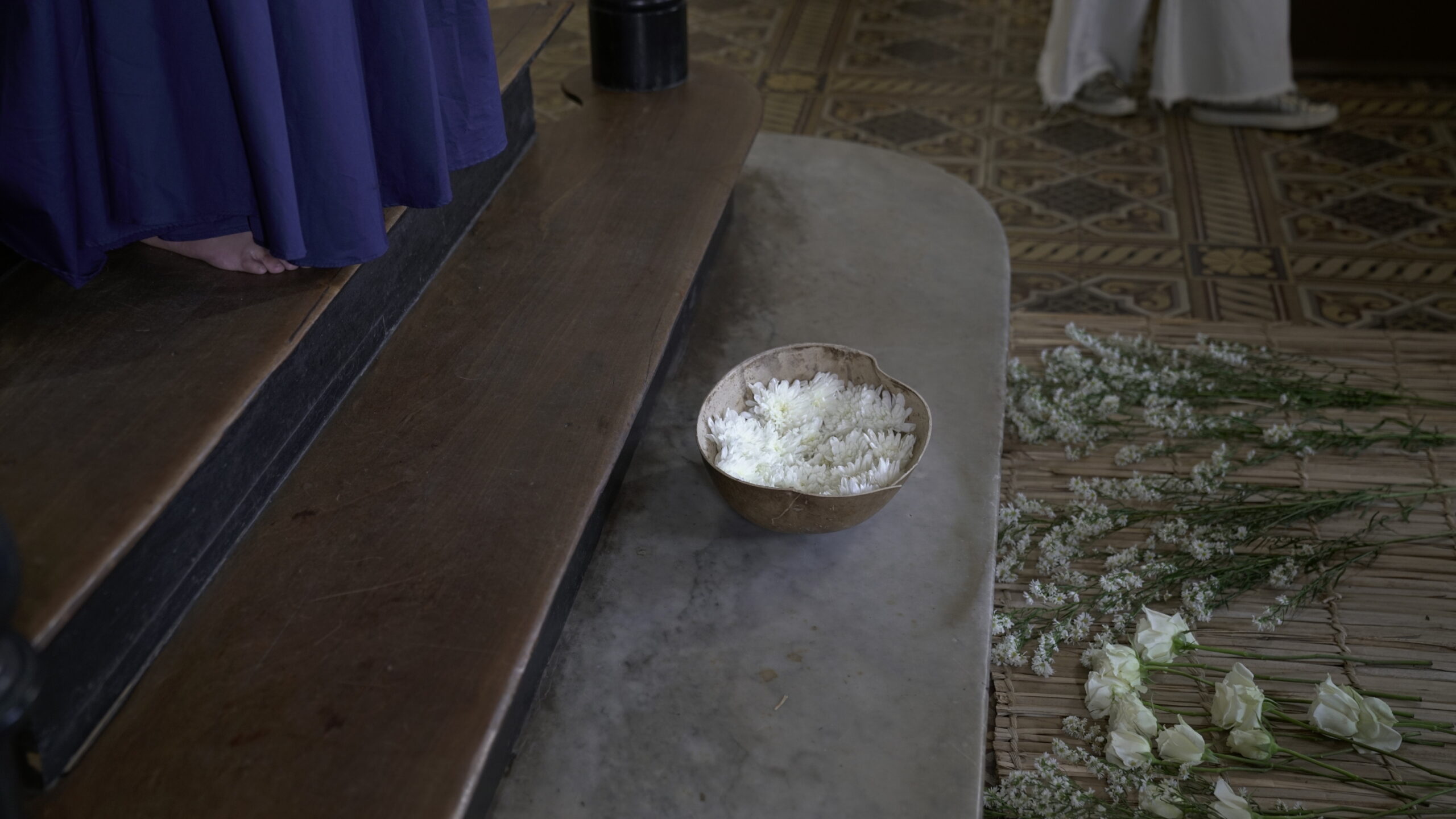
The pedestal, a historical symbol of power, is reconfigured as an altar, transforming into a space of symbolic justice. If, historically, holding a statue meant upholding a regime of dominance, here, the women ascend the pedestal not as objects of contemplation but as a reclamation of a space that was stolen from them. The stage is built from moving bodies, the repetition of ritual gestures, and the presence of elements tied to ancestral spirituality.
“Prayers, Rituals, and Altars” transcends ephemeral action, leaving behind a visual testimony in a photographic series. The images serve as fragments of a ritual that persists: portraits of the artist, still lifes of altars, women in tunics evoking water, and ceremony. The female body rises, is sanctified, and is inscribed in history as an invulnerable divinity. This work is part of an exploration of the body, memory, and spirituality, proposing a milestone for precolonial cultures through a contemporary lens. With a strong feminist anchor, Glez creates a visual and performative language that rewrites history from its roots, integrating resistance and ancestral worship into a space of representation and symbolic justice. Here, the sea does not drag; it returns. And the women, like it, refuse to be forgotten.