Havana (Cuba), 2020
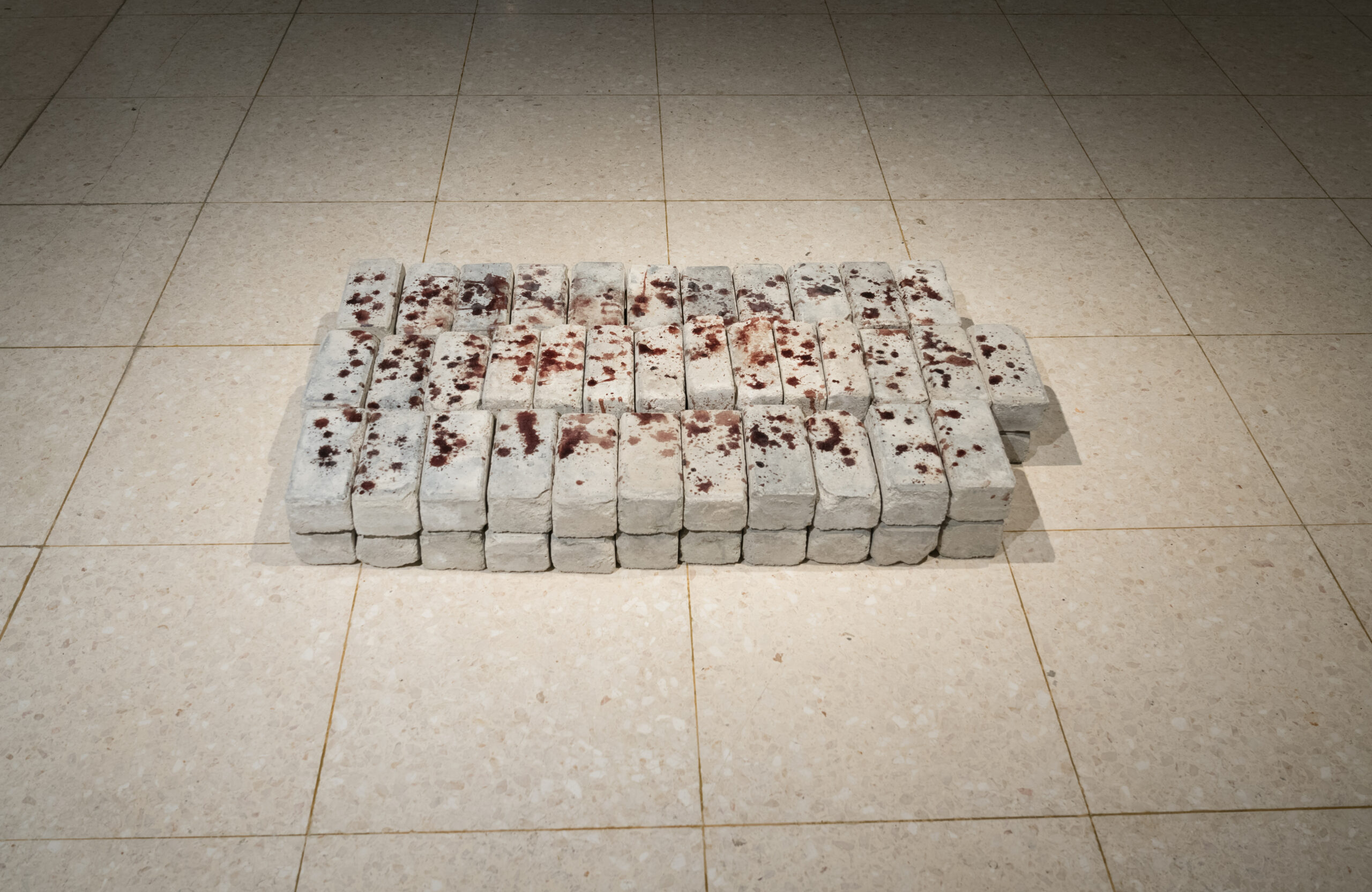
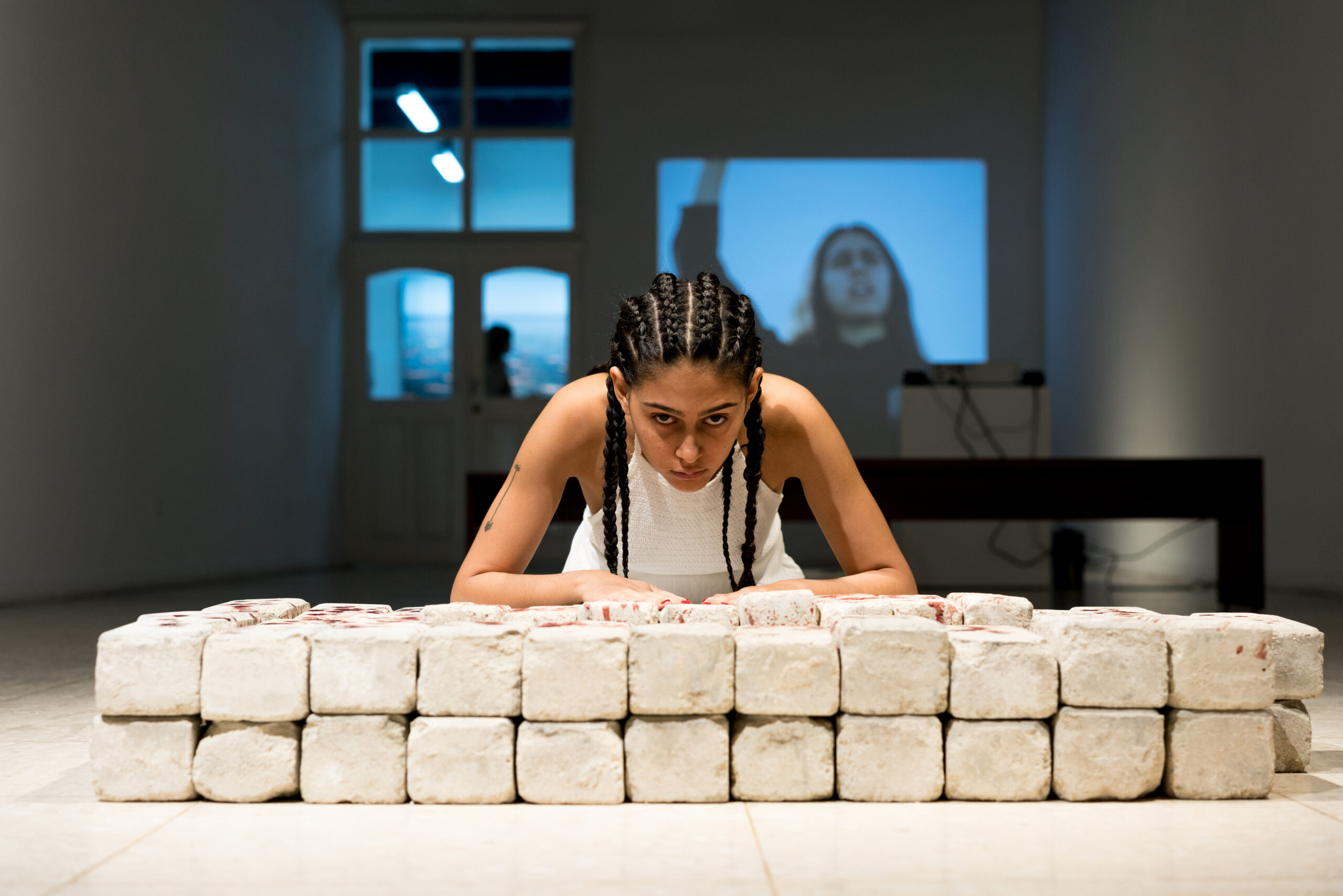
No, No, No emerges within Glez’s work as a reflection on memory and sacrifice, deeply influenced by artists like Ana Mendieta. Through minimalism, the piece intertwines geometric precision with the symbolism of blood, elevating the cobblestones to a place of emotional resistance and historical memory.
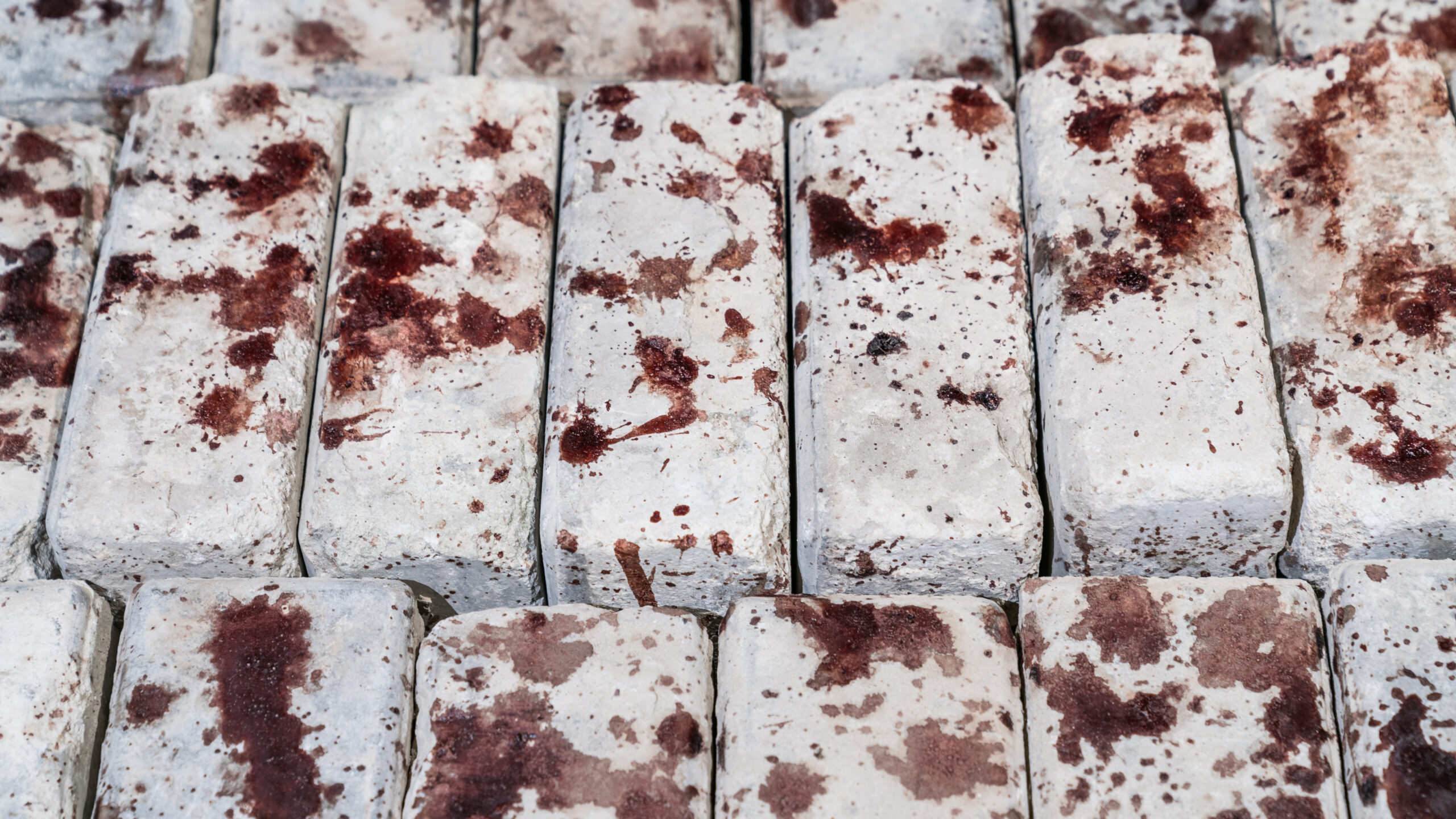
Formed by two layers of cobblestones, the lower layer holds thirty-four, representing the floor of Mendieta’s fall; the upper layer holds thirty-six, alluding to the artist’s age when she passed away. The work is bathed in chicken blood, evoking Mendieta’s La muerte de la gallina decapitate con el pie. This symmetry and the use of blood transform the cobblestones into symbols of sacrifice and enduring memory.
The numerical repetition and symmetry symbolize the relationship between life, death, and memory. Blood highlights the trace of sacrifice and the persistence of the body in the face of time’s passing. The piece affirms existence that cannot dissolve, a constant reminder of what once was.
The blood flows as a presence; it calls, demands, and persists. It is both elegy and spell. A refusal to disappear, a refusal to accept the fall as final. Because her name, her work, and her cry continue to resonate within the stone—a space where absence becomes presence. No, No, No asserts resistance to oblivion, affirming that memory persists in the face of death. The arrangement of the cobblestones and the blood resist dissolution, turning the work into an enduring presence, a question of disappearance and the endurance of time.
María Pérez Marín