
Havana (Cuba), 2018
Laughter and Tears explores the duality of human existence. Through the fragmented figure of the face, Glez confronts the emotional tension between the extremes of being, drawing inspiration from humanity’s complex nature, where laughter and tears are not opposites but manifestations of a single truth.
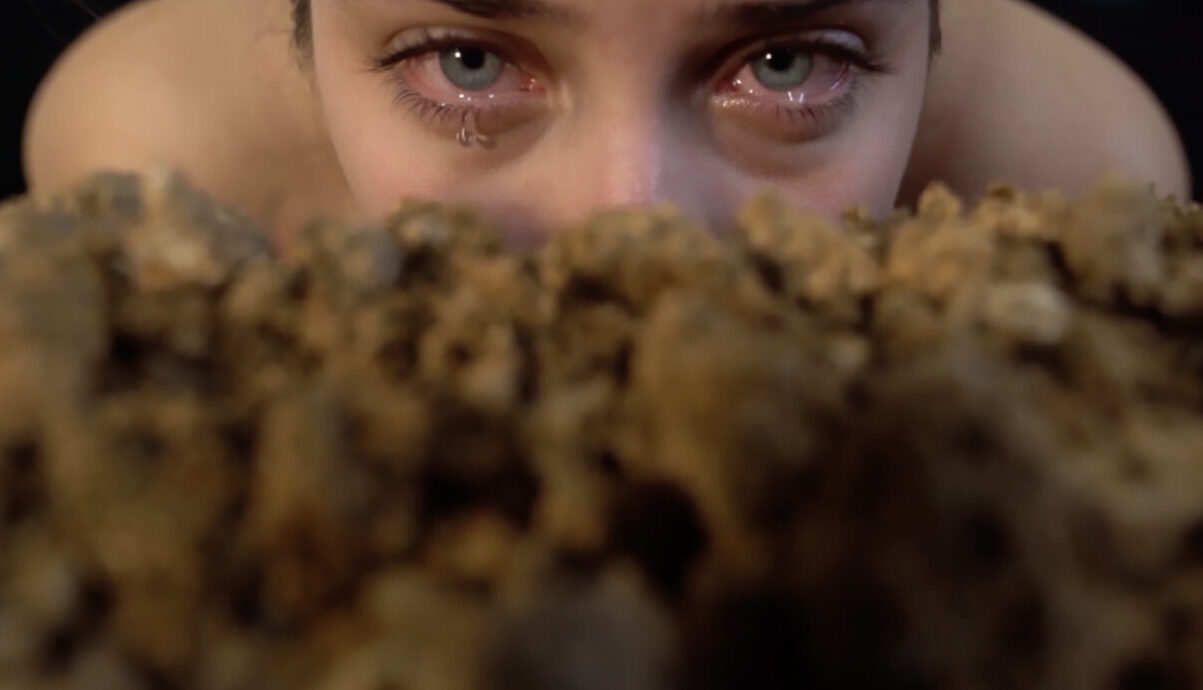
The piece shows a divided face, one half smiling and the other crying. The laughter is represented by the opening and expansion of the mouth, while the tears are encapsulated in the eyes, which spill the stillness of sadness. Though separated by the image, both halves are united by the flesh, creating a dance of contrasts that symbolizes the connection between two seemingly antagonistic emotions.
The fragmented face speaks to human nature, where the earthly, the physical, and the emotional intertwine. Laughter is expansion, lightness, an escape; tears are stillness, a weight that settles within the being. Glez invites us to look at these two poles of the human experience to recognize the fluidity and constant oscillation between them. The work seeks neither answers nor resolution but focuses on the presence of these shared emotions.
The image does not offer certainties but a truth shared in the oscillation between ecstasy and catharsis. It is in that uncertain space, where emotion folds upon itself, that Glez finds her search. In Laughter and Tears, the discomfort of what we are transforms into an invitation to be present, to live the ebb and flow of emotions without fleeing from them. For there is no laughter without tears, nor tears without laughter: both manifest a single being inhabiting human fragility.
María Pérez Marín
