Illes Balears (Spain), 2023
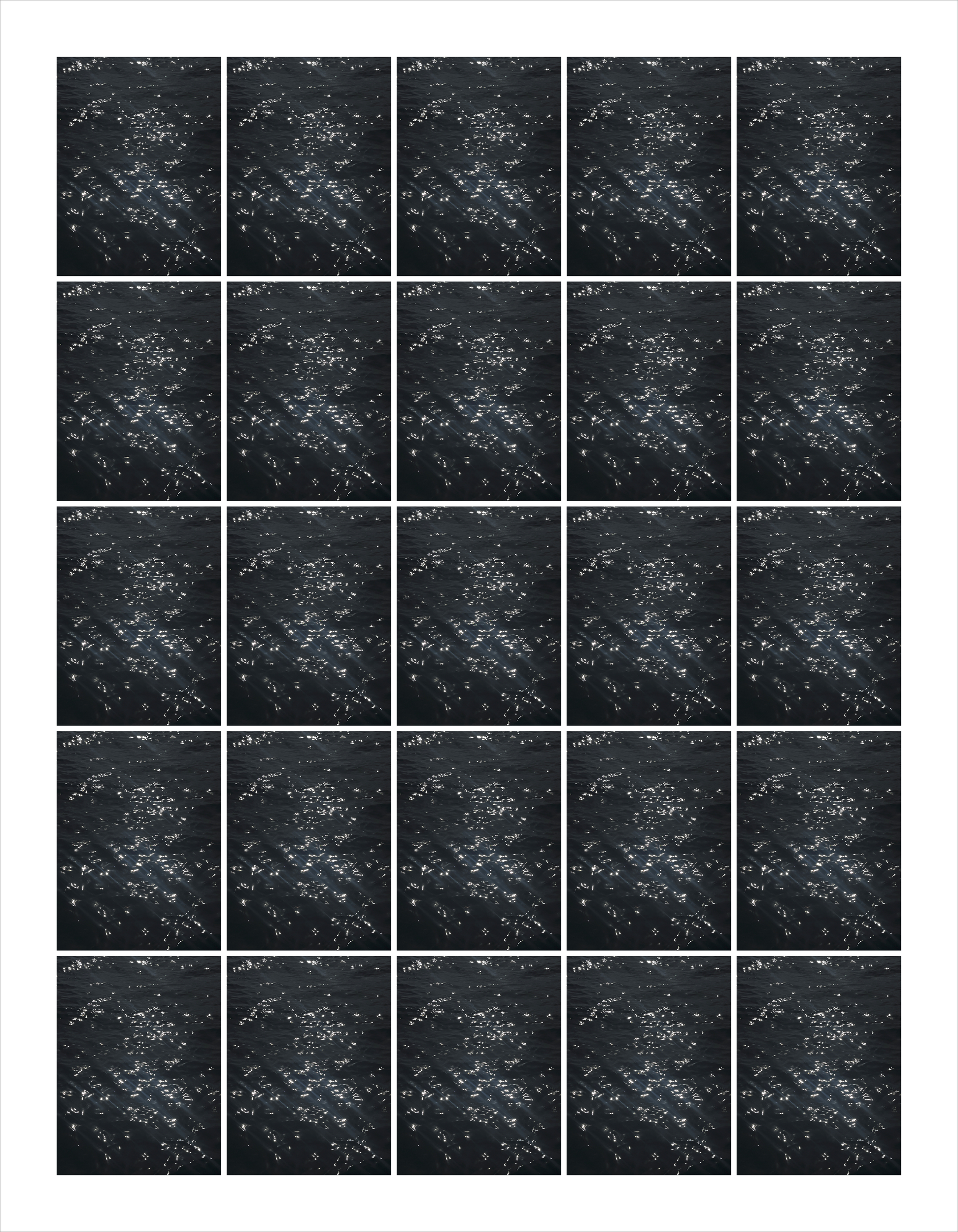
In the darkness of the abyss, a whispered cry of hope. Black Sea is not just a repeated image but a visceral pulse, an echo of absence and search. The artist plunges into an ocean without reflections, into the vastness of a sea that has lost its light— a mirror of her inner void.
Repetition becomes a ritual, a visual mantra that insists on the wound to make it visible. Inspired by the seriality of Andy Warhol, Black Sea unfolds the same image 25 times, arranged in a 5 x 5 grid— a cycle of punishment and learning, a passage seeking closure. In its obsessive reiteration, the photograph reinforces the idea of transformation: darkness as a trial, repetition as exorcism.
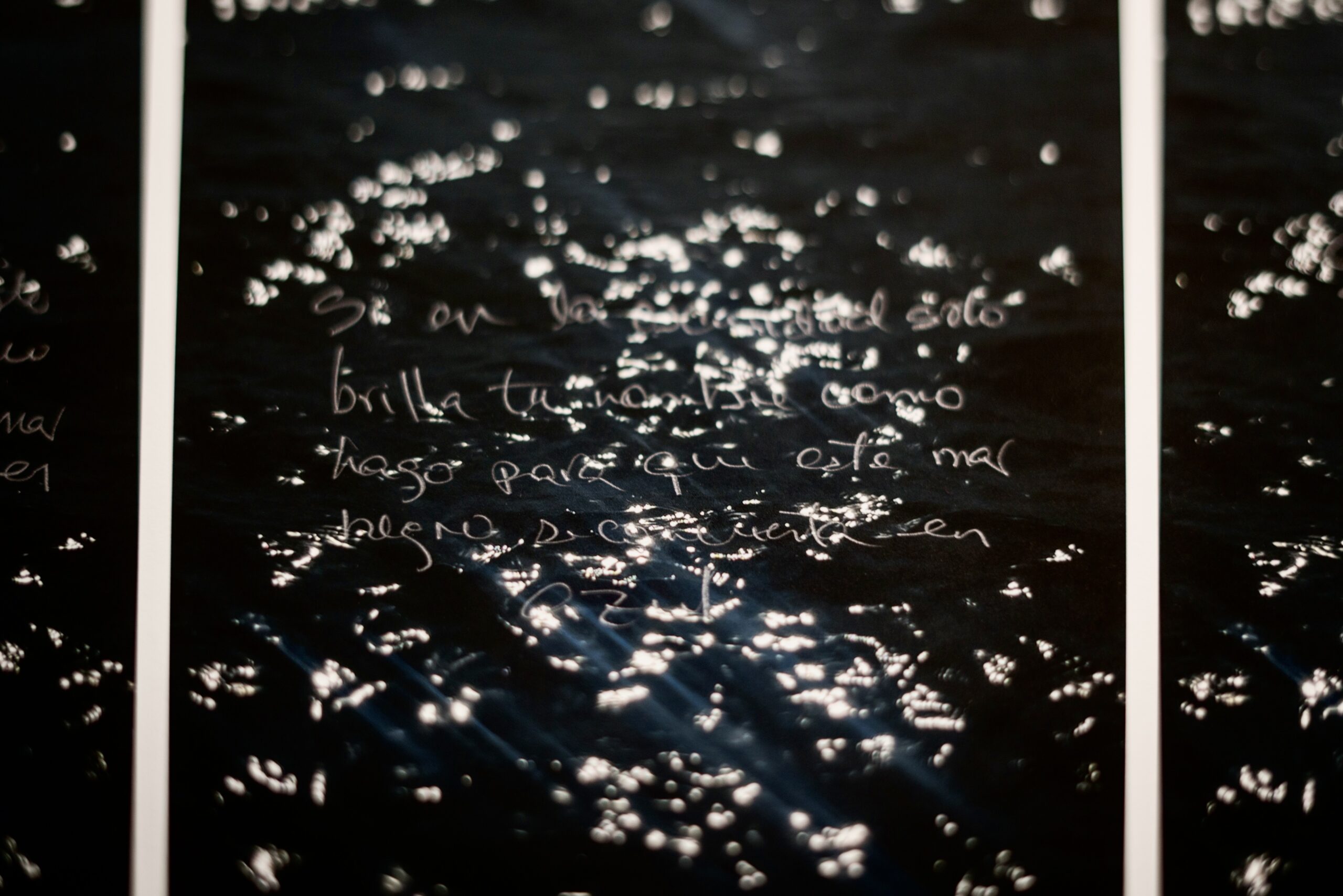
In this black ocean, where hope dissolves, words become a compass in the night. Across the surface, a prayer written by the artist floats like a thread of light: “If in the darkness only your name shines, how do I turn this black sea into blue?” The repetition of the image and the phrase creates a dialogue between immensity and the human voice, between loss and the possibility of rewriting fate.
Black Sea marks a turning point, the cycle’s closing in Alejandra Glez’s work. It reminds us that the possibility of light persists even in the deepest darkness. It is a testimony of resilience, an invitation to transform pain into strength, to find beauty in the ocean’s vastness and in the insistence of the word. Because repetition is not merely an echo of emptiness but the promise that, after the storm, the blue always returns.
María Pérez Marín